
by Philip Ulanowsky
Raise your hand if you already know that Loudoun County had more than 360 dairy farms operating as recently as the 1960s. Ancient history? I was young boy then. A bit earlier, well before the American Revolution nearly 250 years ago, colonists were coming here to start farms on land grants from Britain’s Lord Fairfax. Today, descendants of some of those families continue farming the same land.
The reason this matters to you personally, is that food doesn’t grow on supermarket shelves, much less on the Internet or in some online giant’s warehouses. Nationally, family farms have been disappearing over recent decades at accelerating rates. The USDA Census of Agriculture reported a staggering 141,733 fewer farms in 2022 than in 2017, a loss of more than 20 million farming acres from just five years earlier. The vast, international cartel-owned farming operations are speculation- and profit-driven; providing healthy food for you and your family is neither bottom line nor top concern. Local farms often lose money, balanced only by off-farm income, and it’s getting tougher for many of Loudoun’s farmers.
In 1997, Virginia initiated a Century Farms designation for farms continuously in operation by the same family for a century or longer. Registration requires filling out some paperwork, which is not a priority for many hard-working farmers. About 22 Loudoun farms have registered, but only 11 of these, to my knowledge, are presently valid—others have since passed out of family hands, some sold to developers. Sketches of the 11 known Century Farms will be found below.
A farmer needs to be a scientist, a manager, a mechanic, an innovator, and a tireless worker. Think about one of our local families passing that torch through five, eight, eleven generations, since perhaps the mid-1700s, when some of our Century Farms first put down roots, or even the late-1800s. How many “greats” precede grandfather or grandmother, born in the same house that is home to the family today, still caring for the land, offering fresh food for your table?
The Portrait Project
The Loudoun Heritage Farm Museum in Ashburn is now the archive home of an exhibit on Loudoun’s Century Farm families and individuals, which opened there in December 2024 before appearing in several other venues.
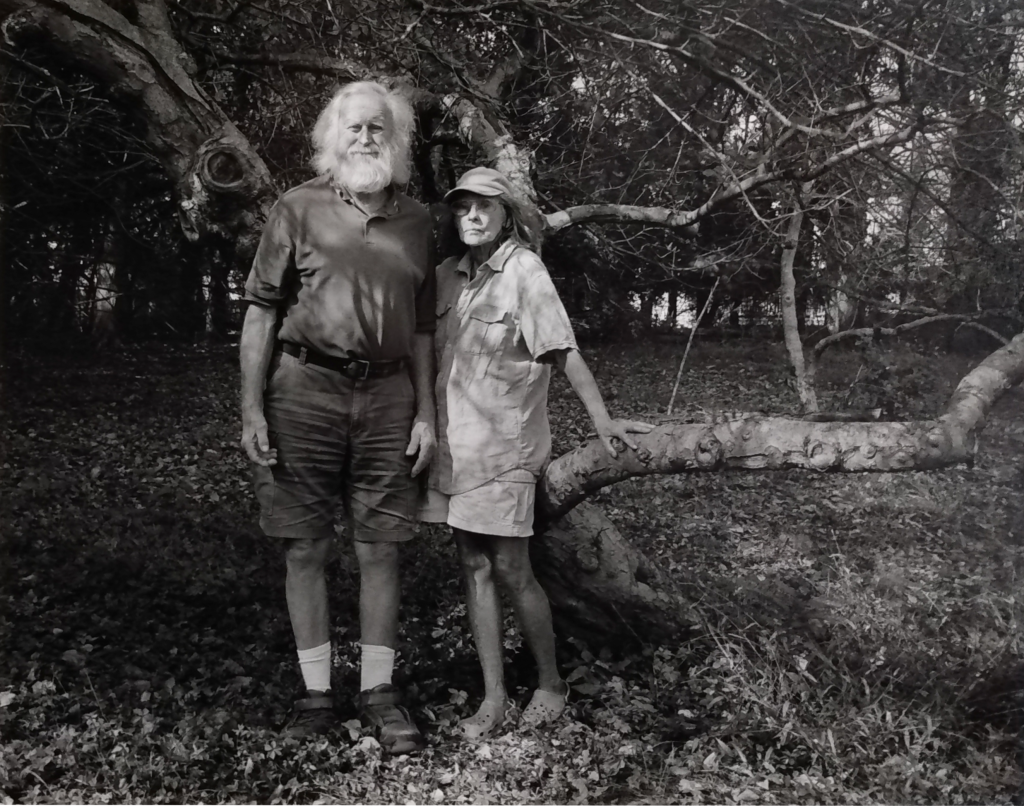
I began a project to make portraits of these folks early in the summer of 2024, after having seen an article on the County’s recognition of its Century Farmers the year before. It seemed a good thing to do for local history, and a small contribution to increasing awareness of the important role of local farming in a healthy economy. I’m a former professional photographer, now pursuing what I love most: black-and-white film photography. I think the medium suits the subject for this project, and for most of the images, I used what’s called a view camera: That’s the slow, old-fashioned kind requiring the photographer to use a tripod and manually focus the upside-down image projected by the lens on a ground glass, with a large dark cloth over his or her head and shoulders in order to block out light. With my camera, each photo is made on a 4×5-inch sheet of film. The exposed film is developed in chemicals in a darkroom, and an enlarged print (which is like film, except with white card backing instead of clear plastic) is then made in a similar way. Nothing is automatic; it takes hours.
All of my subjects were welcoming and generous, proud of the heritage they represent. One photo includes generations 7, 8, and 9. Most of the adults can tell you plenty about their family history, about farming—and all sorts of other things—in Loudoun over the years. Many have, at one time or another, raised everything from vegetables, fruit, grains, and hay, to cattle, hogs, sheep, poultry. One of the farms once paid off a major debt in just a few years with sales of orchard grass—the seed, you see, was in high demand for packing munitions for shipment in WWII.
As I visited the farms, it was a joy to see little children from about two on up freely enjoying their historic countryside homes and fields, bottle-feeding a three-day-old lamb whose mother had died, carrying a rabbit over for a friend to pet, helping with some chore. Playing outside, at home around the larger animals, going for a walk with a favorite uncle, discovering things in the natural environment—it seemed almost like a time-warp, but growing up on a farm is as real and valuable today as it was centuries ago.
About those 360 dairy farms. Besides the local market, the major market was Washington, D.C., and shipments of milk and cream would go out on the W&OD train that ran from Bluemont to Alexandria. Loudoun was famous for dairy, as it had been earlier for innovative farming methods. Today, there is at least one dairy farm in Loudoun—a recent addition, reportedly milking a few cows for ice cream. Maybe one day it will be a Century Farm. Right now, the trend is strongly pulling family farms in the other direction—downward.
I hope you and your children will find out more about local farming, not as some niche or boutique “destination,” but as something we need to find ways to foster before we lose it.
Here are sketches of the 11 still-existing registered Century Farms in Loudoun County. If you know of others that might qualify, please let us know.
Susan Marsh Bolander and Tom Bolander
Montcalm Farm, Hirst/Marsh Family, Purcellville
Montcalm has been kept in the family well over 100 years, persevering through countless challenges. The land was first transferred to former Bucks County, PA resident Stephen Gregg as a 345-acre parcel (of some 6,000 acres) by Revolutionary War Major James McIlhany, Sr. in 1795. During the Civil War, it may have been a stop on the Underground Railroad. In 1911, Edgar and Daisy Hirst purchased it and built a dairy operation, managed by three generations of the Cornell family. Sole daughter Helen Hirst inherited Montcalm in 1919 at age 16 and kept it running through adulthood and her marriage to Edward Marsh, then passing it on to their two sons, David and John. With a split of the land in 1999, John with wife Nancy ensured that 225 acres of Montcalm Farm would remain in the family as they continued to manage and oversee farm operations. Daughter Susan with husband Tom Bolander have continued in that role since 2014. The farm currently grows corn, wheat, soybeans and hay, and has an established tree nursery.
Sara Brown
Oakland Green Farm
Richard Brown of Bucks County, PA travelled south in the early 1700s and set down roots. He initially settled in Taylorstown, but his growing family spread south when his son Henry came to the Goose Creek region (now Lincoln), where several other Quaker families were settling in 1730 or so. The old log cabin and the attached stone house were in place by the time the imperial land grant was made by Lord Fairfax in 1741. Additions to the house and outbuildings continued with the brick house being added in 1790 and the main barn (recently renovated) was built by 1850. New additions, electricity, plumbing, and other modern conveniences have blessedly been added over the now 10 generations to call Oakland Green home. The farm has been a dairy and an orchard, as was typical of Loudoun farms before the modern era. Currently the farm produces primarily beef cattle.
Sam and Ute Brown
Crooked Run Orchard
Mahlon Kirkbride of Philadelphia, PA purchased the land Crooked Run sits on in the 1760s. It was a general farm (a little bit of everything—cows, hay, corn, chickens, vegetables, fruit, etc.) until Lillian Brown in the early 20th Century hatched all types of fowl eggs and made butter to support the farm. Her son, Howell Brown, started and operated a poultry farm of about 5,000 layers plus selling a couple thousand pullets (chickens ready to lay) for Fall sales.
His son, Sam, in the1980s started an orchard of apples, cherries, peaches, and pears along with vegetables and hay production—all of which are still being produced on this pick-your-own farm.
Behind Sam and Ute, an abutting townhouse development peeks through the trees.
Josh Morison
Welbourne Farm
Our family purchased Welbourne and its 500 acres in 1830, and it has been a working farm ever since. Once a livestock and crop operation, it has been exclusively an equine-boarding facility since the early 1980s. Our current herd exceeds 100 horses.
Josh Morison grew up here, learning the ropes from his father, Nat, who began farming Welbourne in the late 1950s, founded our horse retirement venture in the late 1970s, and ran it until passing in 2019. Josh has been part of managing Welbourne for over 20 years. He currently runs the farm with his wife, Amanda, who has been involved with the property nearly as long.
Welbourne has remained a flagship estate in the drive for sustainable land use and historic preservation. As such, the property has been preserved forever both through land easements and the sale of all future development rights.
Patric Copeland and Maura Walsh Copeland
Copeland Homestead Farm
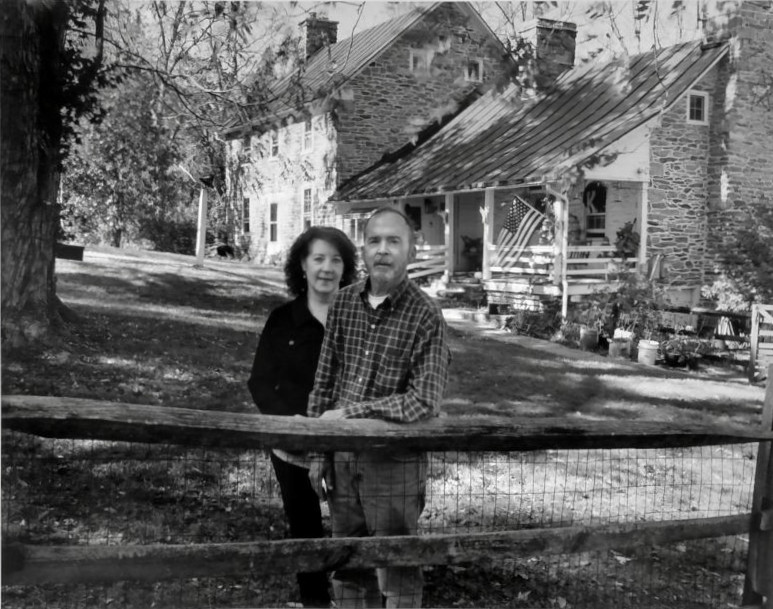
The Copeland Homestead Farm, established in 1765 by David and Deborah Copeland, is recognized as a Virginia Century Farm, and is still owned by Copeland descendants. Loudoun and Copeland records confirm that George Washington surveyed “The Grand Line” between Thomas 6th Lord Fairfax’s Piedmont and Shannondale Manors, running through the Town of Hillsboro to Harper’s Ferry and the Potomac River. This Grand Line still serves as the western boundary of the Copeland Farm. The Copeland Homestead, located south of the Town of Hillsboro, is one of the oldest dwellings in the area. The original 1765 farmhouse with addition built by James Copeland in 1803, a stone spring house, stone meat house and stone barn, are perched on a hill with the adjacent fields still leased to a local farmer. The Copeland Family chose to preserve the property in perpetuity by granting conservation easements, so that their descendants and neighbors continue to enjoy the open space, preserve the forest, and the rural character of the landscape.
Josh and John Cockerill
Fort Bacon Farm
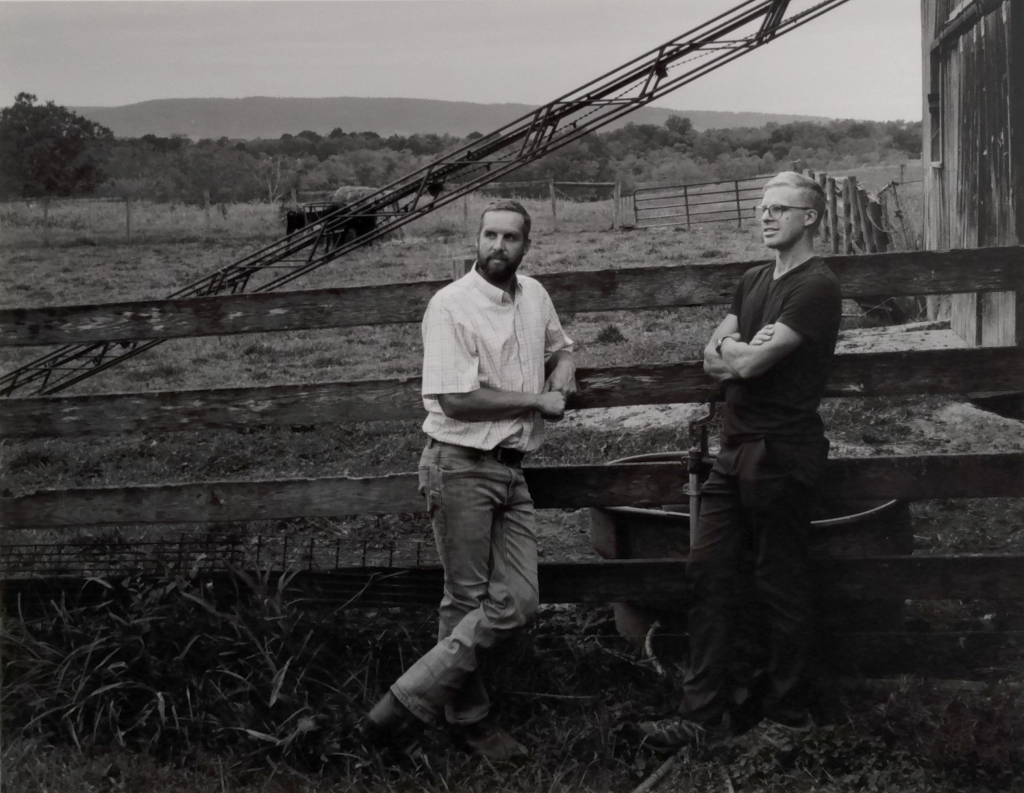
George Washington noted in his diary that he had “halted at a small Tavern Bacon fort” in 1788. The later Ewers’ Tavern is recorded in 1811. John and Kezia Cockerill moved from Cockerill Rd. to buy the current property in 1868, moving the foundations of the house and barn from the nearby creek up to their present hill sites in 1880.
Starting in 1939, William H. Cockerill restored the full original parcel and paid it off in several years from sale of orchard grass (used for packing munitions during WW II). Over the centuries, the Fort Bacon, an apple orchard and dairy operation selling to the D.C. market from 1937–87, has also produced grains and vegetables. After 1987, the Cockerill’s settled (mostly) into raising Angus cattle and sheep.
Charlie, Josh and John’s father, was big in 4-H dairy, a legacy their children are involved in now.
James Grubb
Grubstake Farm
Four generations of the Grubb family have owned and operated Grubstake Farm, ever since Sarah Margaret Thompson and her husband Robert White Grubb inherited it in 1886. The farm had previously been known as Seven Springs, and some 100 years prior, was part of James McIlhaney’s 9,000-acre Ithaca plantation.
Grubstake is situated on 247 acres about a mile East of Hillsboro. It was originally used for horse breeding, which continued until more recent times, when George “Bob” Grubb raised cattle and grew crops. His son James, who currently owns and maintains the farm, rents the fields out just for crops now, but he has also been renovating the barn for hosting parties and special events.
Donna, Sam and Molly, and children Mabel and Doolin Kroiz
Georges Mill Farm
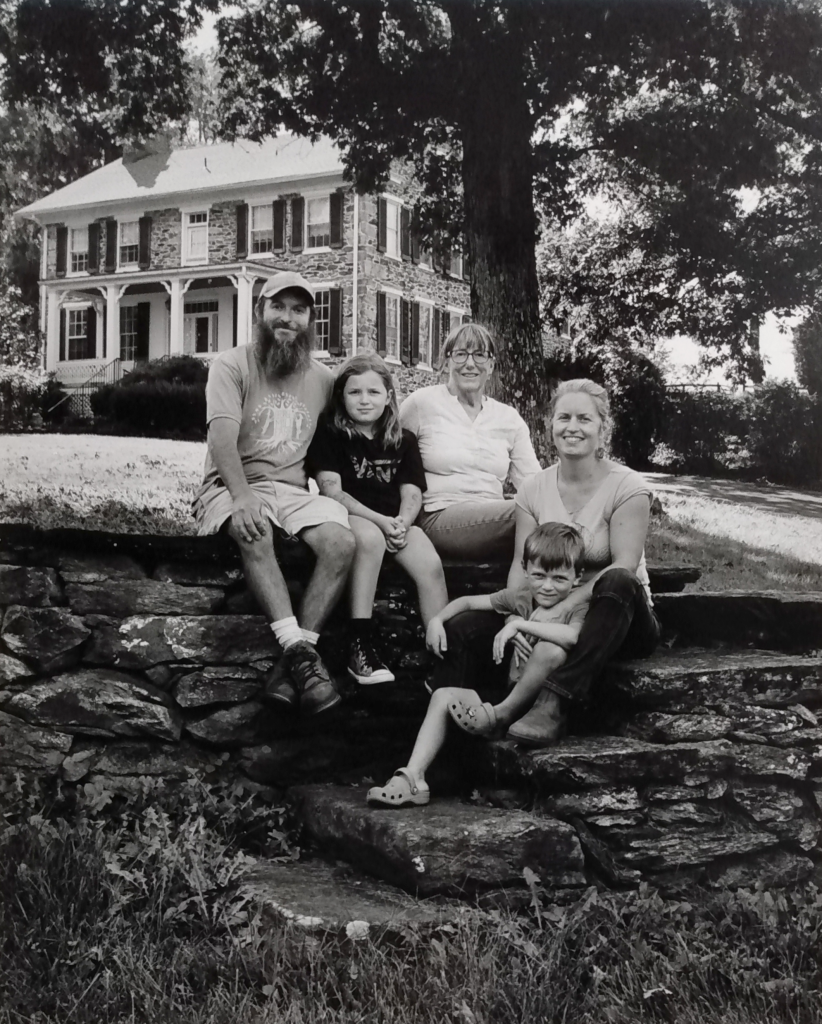
Georges Mill Farm began in the 1750’s with John George, and today it is home to the 7th, 8th, and 9th generations of the family. Farm operations over the years have included breeding horses, growing small grains, raising replacement dairy heifers and beef cows, hosting horse boarders, and growing hay. Since 2012, Molly and Sam have operated a farmstead goat dairy, making fresh and aged goat cheeses and other products from the milk of their herd of 70 goats. From 1999–2020 the “big house” was a bed and breakfast operated by Fran Wire with the help of her daughters, and the house has now transitioned to an air B&B rental. The farm is currently home to 16 family members, spanning three generations.
Jane Muncaster and son Tommy Payne
Locust Grove Farm
The Brown family built and has owned and operated Locust Grove since 1737 when Lord Fairfax deeded the land grant. Richard Brown, an English Quaker from Bucks County, PA, received the 1,700-acre grant and then split it amongst three locations, with Locust Grove on 634 acres in Hamilton. The current owner is Jane Brown Muncaster and her tenth-generation farmer son, Tommy Payne. Jane still resides in the original, 1762 stone house, where she has lived since birth.
Locust Grove began as a sheep and grain farm but has been home to various animals and crops over time. Jane’s father, Richard Pearson Brown, was known for threshing orchard grass seed; Tommy now raises cattle for freezer beef, as well as corn, wheat, soybeans, and hay. He has two daughters in Hamilton and five grandchildren. Both daughters were heavily involved in 4-H growing up, a tradition their children now follow. The farm and remaining land are proof of an unbroken tradition of farming and family values.
Eddie and Marty Potts
Orchard Crest, Purcellville
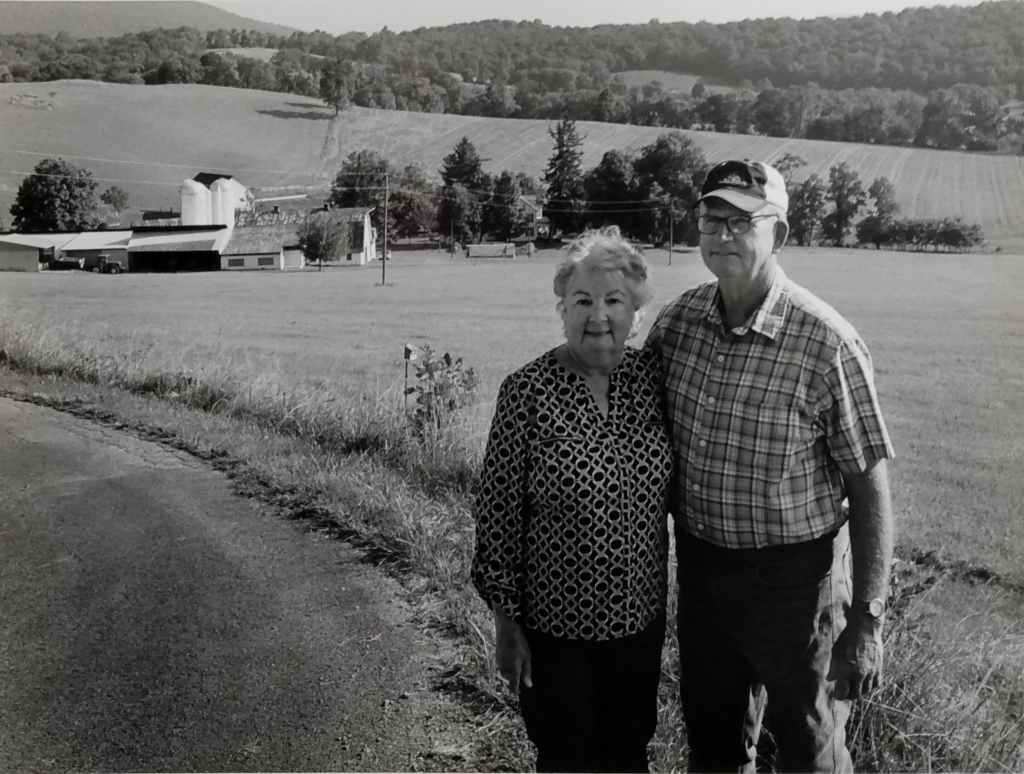
Located in Loudoun County, Orchard Crest became a Virginia Century Farm when the program was established in 1997. The Potts family has owned the farm since 1746, when it was founded by David Potts with a land grant from Lord Fairfax, and today it is primarily operated by Eddie Potts and his wife, Marty. They are 10th-generation farmers.
The original parcel, located between the towns of Round Hill and Hillsboro along the Blue ridge, was 866 acres, of which 267 remain in cultivation by the 10th-generation descendants Eddie and family.
In the late 1800’s the fields were dotted with apple trees and operated as a commercial orchard. In 1948 the family added a grade A dairy, milking 100 registered Holstein cows until 2005. They transitioned again to a cow-calf beef operation growing corn and hay, which is the current business.
Joe Thomas
Glenowen Farm
Glenowen Farm is an Angus cow-calf operation based in Round Hill at the foot of the Blue Ridge Mountains. The Thomas family, descendants of the Rev. Owen Thomas, who emigrated from Wales to Pennsylvania in 1691, owned and operated the farm since 1784. Joe Thomas now has management responsibility and has initiated numerous land conservation and water quality projects to sustain the farm for the next generation of Thomases.