Fifty years ago, enthusiastic citizens of Lovettsville founded the Lovettsville Historical Society and Museum. They were energized by the events leading up to the Bicentennial celebrations of the American Revolution. Bicentennial fever awakened the realization that little old Lovettsville had a heritage that predates the birth of the nation and that many of the founding generations had participated in the Revolution. The community, known as the “German Settlement” long before there was a Lovettsville, shared the rich heritage that was an integral part of the patchwork quilt of the American experience. These citizens, with the support of the Mayor and the Town Council, took the initiative to collect, preserve, educate, and promote community heritage. They realized too that attics, barns, and cellars contained troves of documents, clothes, furniture, and tools — forgotten relics of the Settlement’s past.
When the Lovettsville Bicentennial Committee met for the first time in the Fall of 1974, its members voted unanimously to publish a history of Lovettsville. The Book Committee, headed by Jean Mohler, Dolores Phillips, Eliza Myers, Paul Dunbar and author-historian Yetive Rockefeller Weatherly, with the support of the Town Council in arranging financial ways and means, produced “Lovettsville, The German Settlement” which is still available as the essential history of the community.
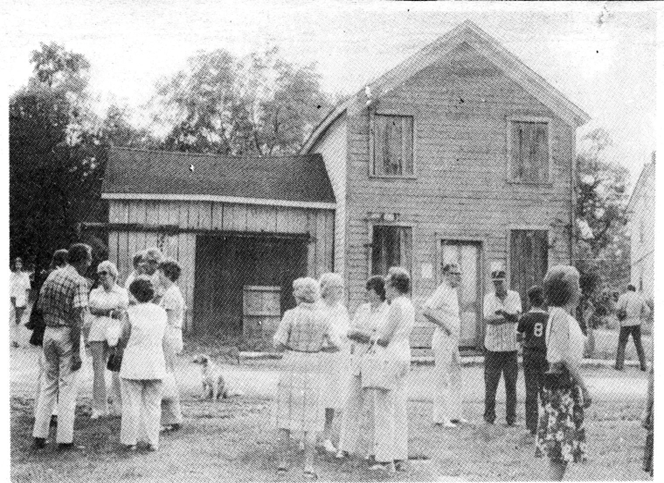
Mayor Richard Hickman and Town Council supported the Lovettsville Restoration Committee’s request in 1974 to restore and maintain the derelict Thomas Potterfield “meat store” as the future Lovettsville Museum. The building and property site had been purchased for the Town Office building, which was constructed in 1975. Additional financial support came in May 1975 when Loudoun County awarded the Lovettsville Restoration Committee a grant of $1,200 to match the funds which members had raised. The initial concept incorporated both the Museum and a modest municipal library.
As the Bicentennial year approached, the Bicentennial Committee, an adjunct of the butcher shop Restoration Committee, planned seasonal activities to celebrate the Bicentennial, starting with a music festival in the Spring, a Fourth-of-July “Review of History” parade and fireworks, and a Septemberfest, highlighting the German heritage with German food, music, and entertainment. The Museum opened for the first time in September 1976, with an exhibition in a partially-restored room.
By September 1979 and after much additional fund-raising and volunteer sweat equity for restoration and renovation, the old Meat Store opened officially as the “Lovettsville Museum and Library.” And, in 1980 the Loudoun Restoration and Preservation Society awarded the Museum and Library Board its first “Save Our Landmark” award.
People interested in the Museum and Library could also make donations to a Memorial Fund in memory of family or friends. The fund has been used for the purchase of artifacts pertaining to the history of Lovettsville, and to establish the memorial garden in front of the Museum. Modest membership dues, generous donations, white elephant sales, silent auctions, antique roadshows, entertainment, and field trips continue to support the Museum throughout the years.
In 1984 a professional librarian graciously volunteered and spent untold hours cataloguing and expanding the collection of books and initiated very successful story hours and reading programs. By July 1985, the County Public Library system took over the expanding library operation, which in fact grew to an extent there was no longer sufficient space for the museum items in the small building.
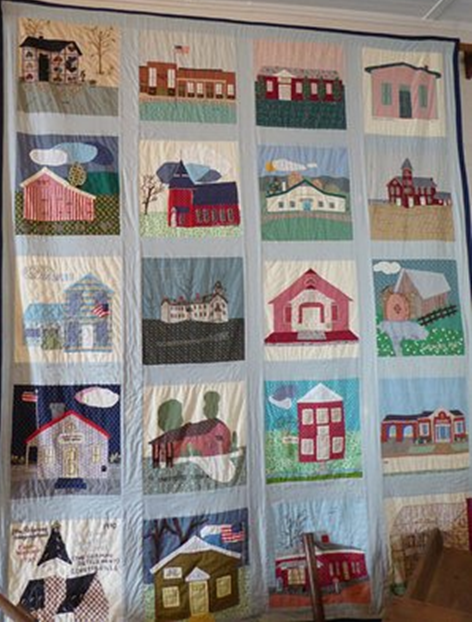
The Museum’s collection was packed up and stored in April 1987 until the construction of a new library would permit the re-establishment of the Museum. With the completion of the Lovettsville Library on Light Street, and another renovation of the old Potterfield Meat Store, the Museum opened again with a Christmas exhibit and reception on December 8, 1990. In celebration of the reopening of the Museum community members created the” Lovettsville Community” patchwork quilt now on display in the Town Hall.
The 1990s witnessed profound changes in Loudoun County, changes that reached into Western Loudoun County affecting the historic landscape of Loudoun Valley and the German Settlement. Sleepy Lovettsville, in which the 2000 Census counted about eight hundred residents, woke up to the challenges of the new millennium. Lovettsville was changing. Gravel roads were being paved; water and sewer lines replaced wells and septic systems. Mayor Walker’s administration-initiated plans for new neighborhoods, a town square and town center, with a Town Green with a pavilion for concerts and festivals.
The Historical Society also faced challenges and changes in the new century: computers, digitization of documents, threats to the historic landscape from new development, and the disappearance of old homes and farms, and the people who had owned them. The people, most importantly, were the storytellers, the custodians of the Lore, who knew the generations and the whys and wherefores of the old days.
The generation of the Historical Society’s founders passed-on, retired, or moved away. A new generation assumed the administrative responsibilities of the Society and Museum. In January 2009 the Lovettsville Historical Society was incorporated in the Commonwealth of Virginia as a non-profit, tax-exempt 501(c)(3) organization.
The focus of the Historical Society’s programs and exhibits have changed gradually from the “look what we found in grandma’s attic” of the early years, to curated exhibits of artifacts, photographs, and graphics that provide a contextual stage of people and events affecting the community and its inhabitants. New generations and newcomers to Lovettsville in the 2000s want to know the stories of the people who lived here, the families, where they worked, where they fought, worshipped, and are buried. They want a “sense of place” where they now call home, a sense of rootedness so they own part the story and feel that they too are part of the story. The Historical Society’s Sunday lecture series and seminars offer an opportunity to explore and discuss diverse subjects presented by local and nationally renowned historians: Native American Inhabitants, Indigenous people’s fish traps along the Potomac, Slavery among the German settlers, Loudoun Rangers in the Civil War, German Settlement Patriots in the Revolutionary War, Colonial Land Tenancy, etc.
In a series of Monday Evening field trips, the Society has explored the historic landscape of the German Settlement, visiting homesteads that have not changed since colonial times, and exploring sites of notorious murders, Civil War skirmishes and graveyards, in the gathering Spring twilight and the crisp evenings of October. These and other events not only open doors to the past, but they are also the media for community building and cohesion. Strangers become neighbors and friends. The landscape and people you know and love are your home.
Exhibits continue to accumulate and consist of many objects pertaining to a past way of life in the Lovettsville area, including tools, clothing, utensils, personal items, photographs, and historic documents. Information is available on genealogy, families, homes, schools, churches, businesses, buildings, and organizations. School classes and other groups are welcome to visit the Museum by special appointment. Lectures are given monthly by leading historians on topics pertaining to events surrounding Lovettsville.
We hope to break ground for the Museum expansion during 2026, to better showcase the Museum’s assets, enlarge research facilities, install a restroom, and improve traffic flow.
Preservation of the heritage of the Lovettsville area is extremely important during these rapidly changing times. We welcome you to be a participant in the Lovettsville Historical Society. Your time, talents, interests, curiosity, labor, ideas, objects, or monetary gifts are welcome and needed. Contact a board member. Our brochure outlines the goals and mission of the organization and how you can participate.