By: Patrick Wilson
28 March 2026
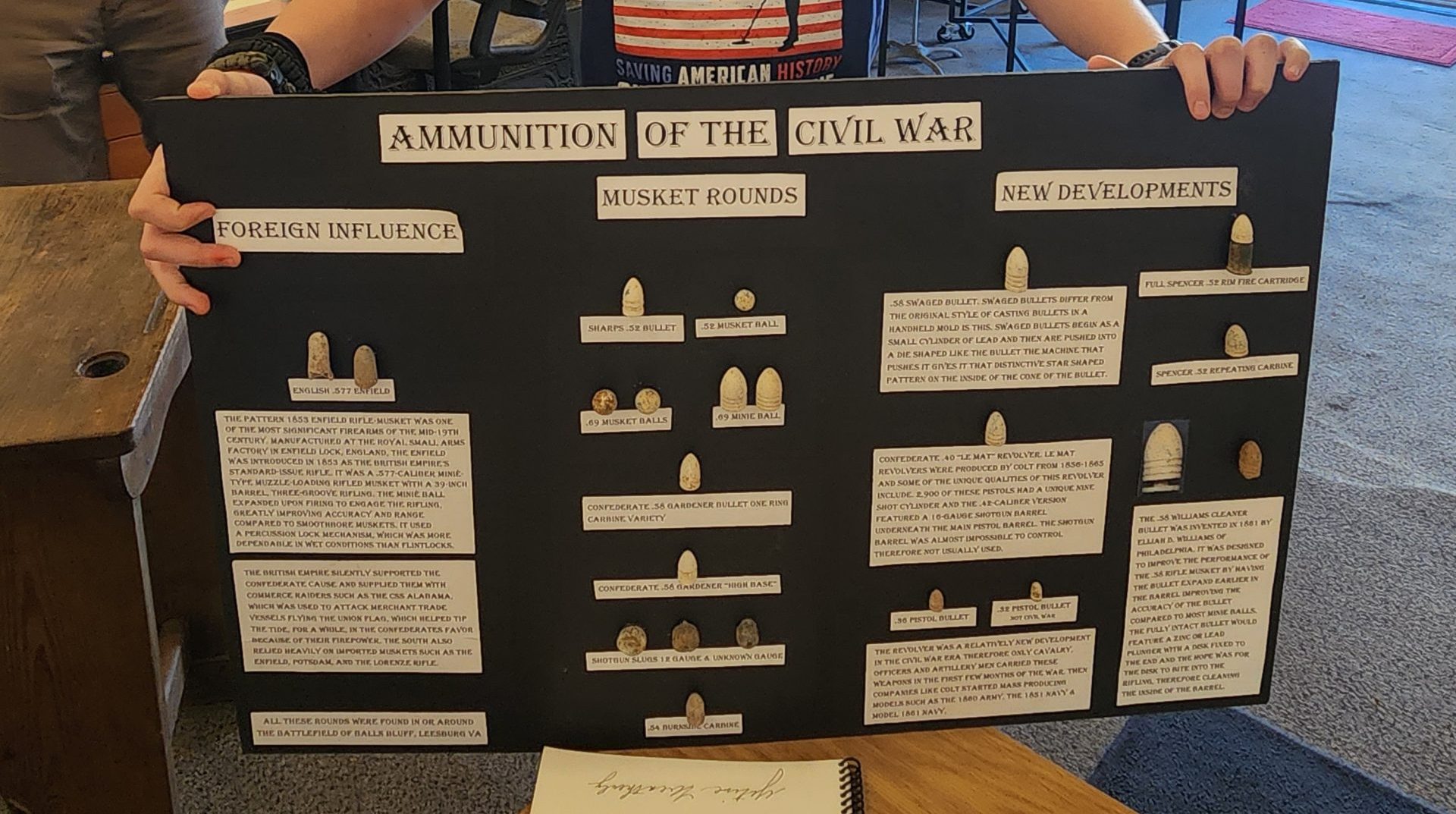
I have been interested in metal detecting for a few years now, and when the Lovettsville Museum asked me to write an article on my favorite finds, I realized I didn’t have a clear idea of what my favorites are. I’m always excited to find coins, of course, but also Civil War artifacts, interesting pottery and bottles, and old iron tools, among other things. So, it really caused me to give some thought as to which of my finds I appreciate the most and why. What I’ve determined is that it has very little to do with the value or rarity of the find, but rather what the find can tell us about the history of the people and the area in which it was found.
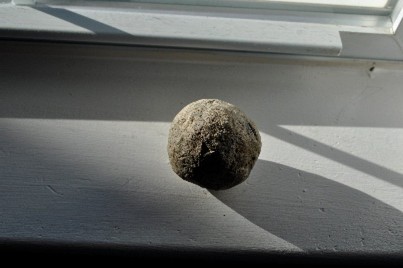
Some of my favorite artifacts have altered knowledge of local history and the civil war. A lead grapeshot unearthed at what is now Shiloh Manor Farm, located a few miles south of the town of Lovettsville, is possibly the most history-changing artifact that I have found. The closest documented Civil War battle was just a mile north at Glenmore Farm on October 16, 1862. Previously, it was believed that there were no Union cannons at the skirmish dubbed “The Affair at Glenmore Farm.” Grapeshot was usually fired in a canvas bag along with fifteen or sixteen other lead balls from a six-pound cannon. This find provides evidence of cannons fired in an area that we once thought had never seen artillery.
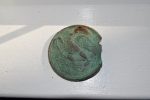
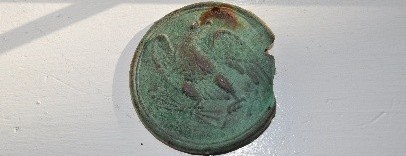
One of my first significant civil war finds was a Union eagle chest plate. These buckles would have supported a cartridge box strapped across a soldier’s chest. It was dug up, along with other Civil War artifacts, in an inconspicuous farm field near the corner of Axline and Elvan Roads. It established evidence of civil war infantry camps in that vicinity. These finds encouraged me to research and learn more about local Civil War history.
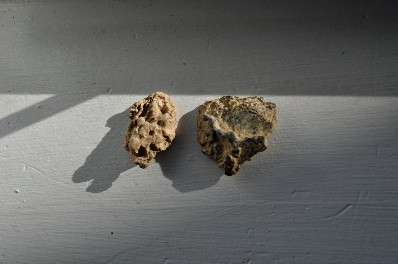
Other finds which shed light on local history sometimes seem insignificant. Consider, for example, buried areas of laid gravel and small pieces of melted lead. Buried gravel points to a potential previous carriageway or roadbed. Melted lead, also called campfire lead, is indicative of a civil war campsite. Soldiers would take their bullet cartridges, pour the gun powder on the wood, and strike a percussion cap in their musket to start a fire. This technique was especially helpful for lighting damp wood. The bullet was useless without the gun powder; therefore, soldiers threw those in the fire as well, creating small, melted patties of lead. Layers of rock and chunks of lead can reveal history that was previously unknown.
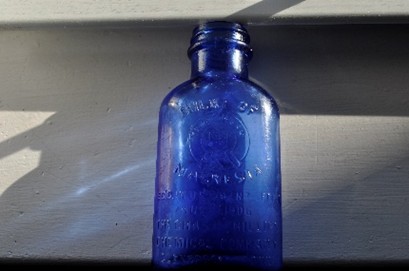
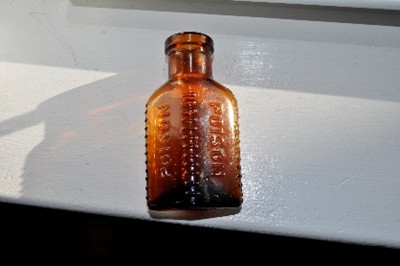
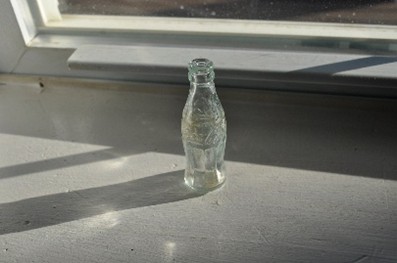
I once thought of glass bottles as litter and trash, but now see them as a timeline of workmanship and history. Researching found bottles has taught me to “read” the seam lines of production to date them. The oldest bottle I’ve dug has a seam from the bottom to the middle of the neck, indicating 1860-1880 production. This find progressed the date of trash pit I was working on, from the late 1890s to an earlier era. A 1920’s cobalt blue Milk of Magnesia bottle makes my list of favorites because of the amount of information in the embossment and remnants of the paper label. This bottle shows a more artistic side to bottle production rather than purely functional and practical plain bottles. A poison bottle from a similar time period was made by the Eli Lilly company, and possibly held strychnine. This bottle shows an increased concern for safety with the dramatic embossing. Even the ribbing was intentional for cautionary purposes. A mini-Coca-Cola bottle was first produced in the early 1930’s as a marketing technique. My dug bottle was produced in 1942, and is a reminder that people were trying to look to the bright side and keep society normal during WWII. Often considered junk, glass bottles have an interesting style of manufacturing that changes throughout history.
From exciting military finds to mundane items like pottery fragments, old tools, and even rocks, the ground in our area is full of interesting things that can enhance our knowledge and help paint a picture of life in centuries past, even back to the first settlers before the founding of our country. We are blessed to live in such a history-rich area, and no doubt there are many other great finds out there waiting to be discovered.
About the author: Patrick Wilson is a home-schooled 14-year-old, who lives in the Lovettsville area. He has been metal detecting for 5+ years and has found over 200 artifacts and more than 40 bottles. The article describes some of his favorites.